

South Florida’s technology and finance story is moving beyond residential migration. FOX Business reports that billionaire venture capitalist Peter Thiel has signed a record-setting lease in Miami’s financial core, a move local real estate leaders see as evidence that the West Coast-to-Florida shift is increasingly bringing companies, teams and long-term business operations with it. The Miami commercial market is now reflecting the same migration patterns that first appeared in the residential sector.
Thiel’s family office is expected at 830 Brickell, the 55-story office tower that is also home to companies including Citadel, Microsoft and Thoma Bravo. His reported lease rate of $250 per square foot set a local record. Joe DaGrosa, founder and chair of DaGrosa Capital Partners, told FOX Business that the significance extends beyond a single tenant: as firms establish offices, employees and leadership teams follow, creating additional demand for housing across the region.
That shift is unfolding as major technology companies prepare for possible liquidity events. The publication points to companies including SpaceX, OpenAI and Anthropic as potential catalysts for a new wave of wealth creation, building on an earlier California-to-Florida migration. The implication for South Florida is not simply more second-home buyers, but a deeper base of founders, investors and employees considering the region for both business and daily life.
The economics of that move remain part of the conversation. Before the post-pandemic surge, DaGrosa said Class A Brickell office space typically leased for roughly $40 to $60 per square foot. The gap between those historic rates and the new $250-per-square-foot benchmark illustrates how competition for top-tier space has intensified. FOX Business also notes the contrast between Florida’s tax structure and proposals elsewhere, including California’s proposed billionaire wealth tax, as founders and institutional leaders assess where to place both capital and operations.
Tere Blanca, founder, chair and CEO of Blanca Commercial Real Estate, described the regional market as “on fire” and pointed to a growing roster of technology and finance leaders with South Florida ties. DaGrosa similarly framed the migration as both quantitative and qualitative: tax savings matter, but so do quality of life, business conditions and the ability to build an in-person company culture. Palantir’s headquarters move to Miami and the expansion of firms such as Iru, the AI-powered IT and security company formerly known as Kandji, are cited as examples of a broader corporate footprint taking shape.
The labor market is evolving alongside that investment. According to the Miami-Dade Beacon Council figure cited by FOX Business, technology employment across the county has grown about 25% over the last several years. Blanca argues that Miami should not be treated as an imitation of Silicon Valley, but as a market with its own conditions for founders and entrepreneurs, including strong office attendance and a culture that supports face-to-face collaboration.
Growth also brings pressure. The article acknowledges rising housing costs, constrained supply and heavier traffic as challenges that accompany continued migration. DaGrosa pointed to faster permitting in Miami, while Blanca referenced Florida’s Live Local Act and its evolving role in encouraging workforce housing development. Their shared view is that sustained private investment will need to be matched by housing and infrastructure that can support a wider range of employees and executives.
The geography of the growth story is expanding as well. With Brickell’s most sought-after office space commanding significant premiums, new Class A development is pushing through the broader tri-county South Florida corridor. That decentralization connects Miami’s core business districts with a wider network of residential, cultural and commercial neighborhoods, strengthening the region’s appeal to globally mobile founders, executives and investors.
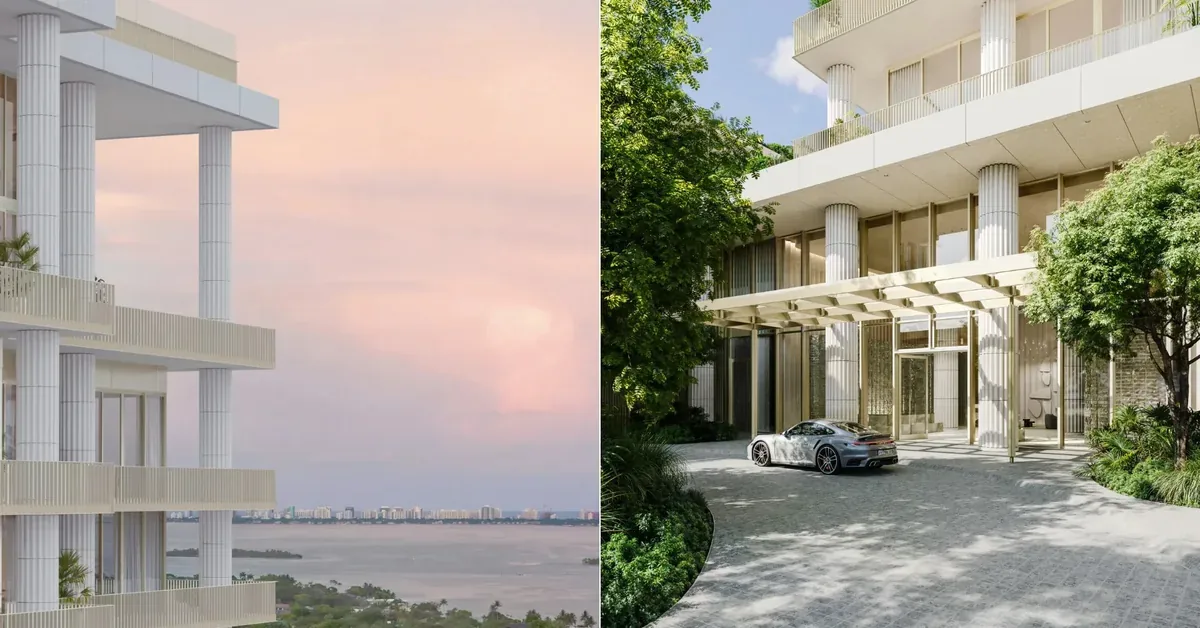
For Kempinski Residences Miami Design District, this broader economic shift provides relevant context for the residential evolution already underway at the gateway to The Miami Design District™. The project brings together two 23-story residential towers, 128 residences, six private townhomes and approximately 70,000 square feet of amenities, with hospitality by Kempinski and design leadership from Arquitectonica, Rockwell Group and ENEA. Its position between the cultural energy of The Miami Design District™ and Biscayne Bay reflects the kind of connected, internationally oriented lifestyle increasingly associated with Miami’s next chapter. Learn more about Kempinski Residences Miami Design District.
As South Florida continues to attract companies, capital and talent, the FOX Business report suggests the region’s trajectory is becoming more structural than cyclical. The movement of offices and leadership teams is reinforcing residential demand, while the region’s culture, business climate and global connectivity are becoming central to the decision to stay.